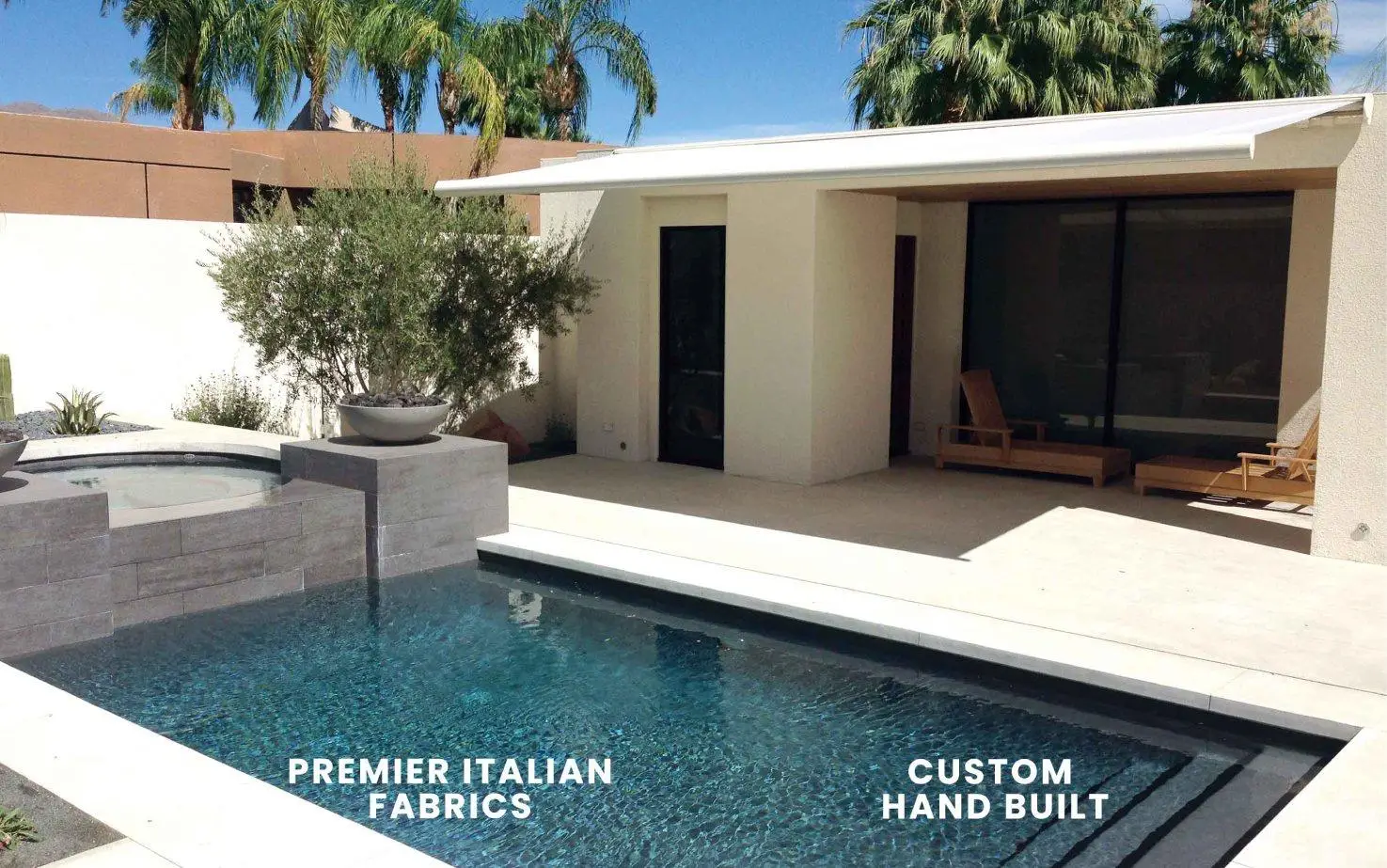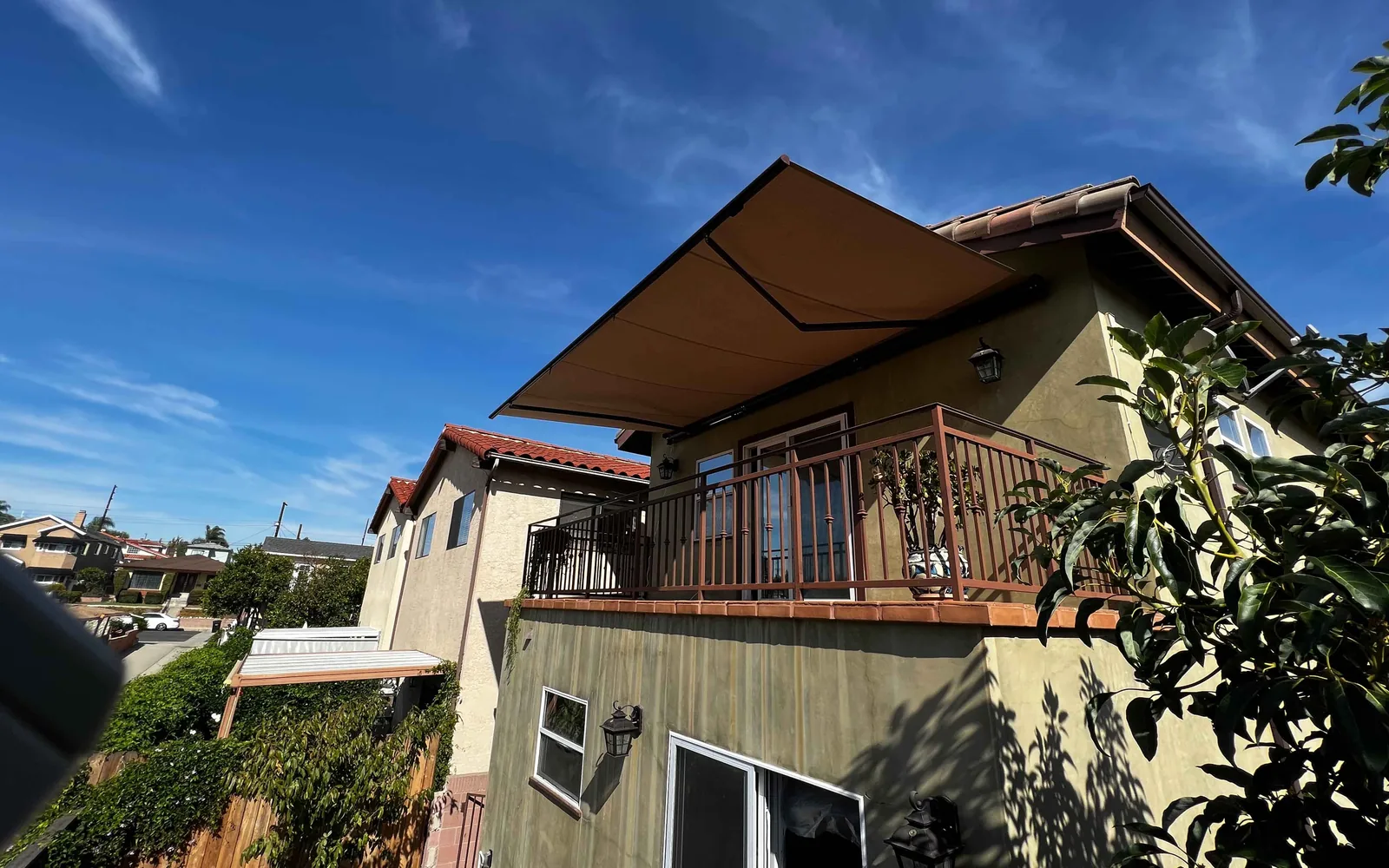
A retractable awning extends shade over your patio or deck on demand and rolls away into a sealed cassette when you don't need it. Apollo awnings are chain-driven, dressed in Tempotest Italian fabrics, and built to your exact opening, not pulled from a stock size.
Measured, built, and installed by factory-trained technicians, with Somfy motorized options that retract themselves when the wind picks up.
See Apollo's custom retractable awnings in action, from chain-driven manual to fully motorized.
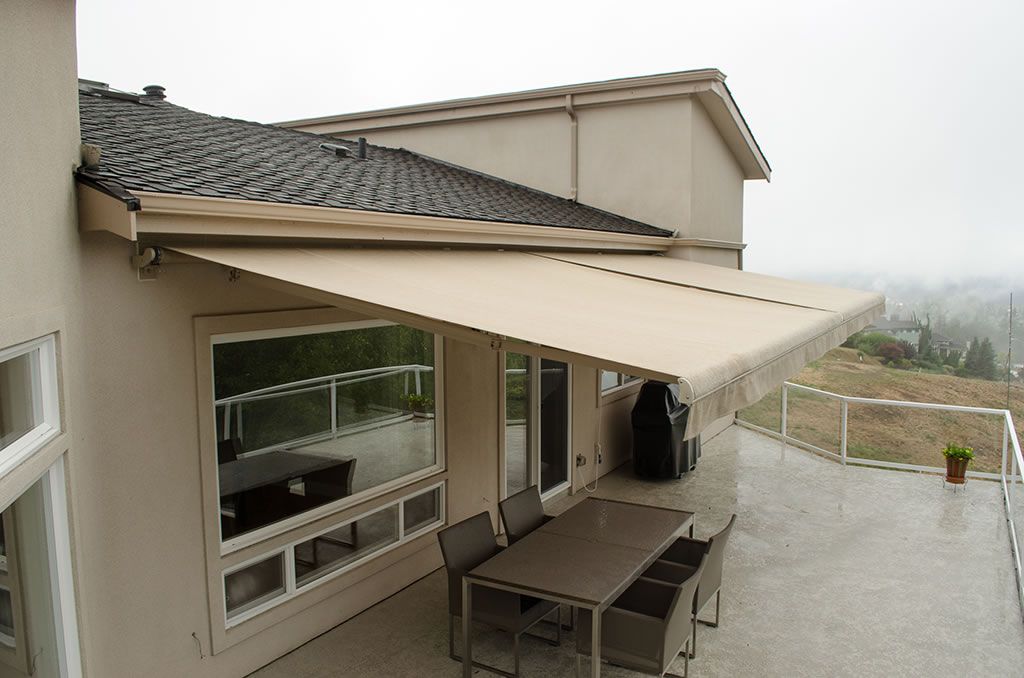
A retractable awning is shade you control. The fabric rolls out over your patio or deck on folding lateral arms, held under constant tension so it stays taut instead of flapping. When you're done, it rolls back up against the house. No posts in your patio, no permanent structure, no staring at a frame all winter.
Apollo builds full cassette awnings: when the awning retracts, the fabric and arms disappear completely inside a powder-coated aluminum housing. That matters more than it sounds. The cassette is what protects the fabric from UV and weather during the 90% of its life it spends rolled up, and it's the difference between an awning that looks crisp in year ten and one that looks tired in year three.
Shoppers call this same product by half a dozen names: retractable sun shade, retractable patio shade, lateral arm awning, roll out awning. Whatever you call it, it's the horizontal, overhead kind of shade, which makes it a different tool than the vertical drop screens we build under the PowerScreen name.
Not all retractable awnings are created equal, and most of the difference hides inside the arms and the housing where you can't see it on a showroom floor. That's why the sections below get specific about what's inside ours.
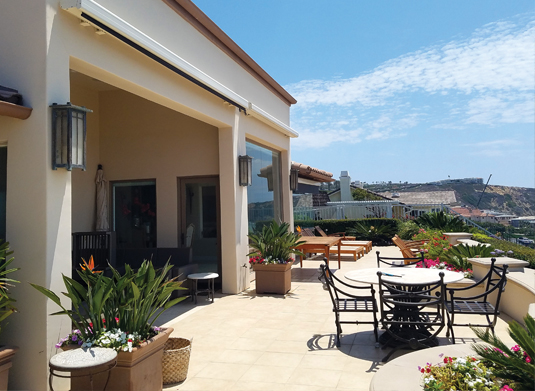
Anywhere the afternoon sun makes a space unusable, a retractable awning gives it back. Patios and decks are the classic install, but the same chain-driven system mounts to second-story balconies, wraps poolside lounges, and shades storefronts and restaurant seating. Every unit is measured to your exact opening: width, projection depth, and mounting style are chosen for your wall, not a warehouse shelf.

The everyday workhorse: shade over your seating or dining area at the press of a button, and open sky when you want it. A patio awning turns a west-facing patio you avoid at 4pm into the spot you use most.

Decks take sun from every angle, and an umbrella only covers the table. A retractable awning shades the whole deck without posts drilled through your deck boards, then retracts so the deck stays open to the sky.

Upper floors catch the harshest sun and the strongest gusts, which is exactly where a wind-sensor-equipped motorized awning earns its keep. Mounted to the wall or roof fascia, measured for the exposure.

Multiple matched awnings can shade a whole elevation. By the pool, over the outdoor kitchen, across a bank of glass doors: same fabric, same housing color, one clean architectural line.

Most Apollo retractable awning installations run $5,500 to $9,000. Where you land in that range comes down to four things: width, projection depth (how far out it extends), fabric selection, and motor options. A 10-foot manual awning over a door costs a lot less than a 20-foot motorized unit with a wind sensor shading an entire deck.
That price is installed, not boxed. It includes the on-site measurement, custom fabrication to your exact opening, the full cassette housing, your fabric selection, and professional installation by a factory-trained technician. Your dealer measures your opening and quotes you a firm number, so you're never guessing from a price range on a website, including this one.
If you've been comparing against $600 imports from a big-box shelf, you're comparing a different product class: stock sizes, lighter frames, and no professional installation. The sections above and below explain exactly where that money goes.
The awning industry has a dirty secret: from the sidewalk, a cheap awning and a great one look almost identical on install day. The difference lives inside the arms, under the finish, and in the fabric weave, and it shows up in year five, not week one. Here's exactly where an Apollo awning is built differently.
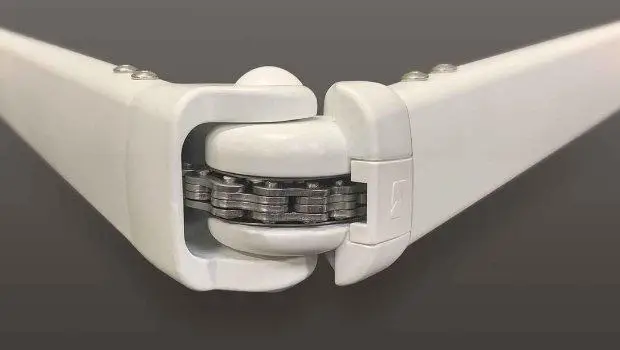
Start with the arms. Most retractable awnings tension their lateral arms with cables: intertwined strands of thin metal wire that stretch, fray, and eventually let the fabric sag. We use chains, interconnected metal links with far higher tensile strength that distribute the load evenly across the arm. The fabric stays drum-tight, the extension stays even, and the awning retracts straight year after year.
Interconnected metal links resist wear and distribute weight evenly across the arm, so the fabric never sags or retracts crooked. Cables stretch and fray; chains don't.
Fabric and arms seal completely inside the aluminum cassette when retracted, protected from UV, rain, and debris. Open-style awnings leave the fabric exposed on the roller all year.
Solution-dyed acrylics from one of Europe's premier mills. The color runs through the fiber itself rather than sitting on the surface, which is why it shrugs off UV that bleaches cheaper fabric.
Our proprietary pre-treatment and powder coat surpasses AAMA 2604 and has been tested through a 3,000-hour salt spray, with UV inhibitors that keep the frame from fading. Coastal-grade, everywhere.
The same architectural-grade aluminum used in structural applications, powder coated in your choice of color. It's the difference between a frame that holds its geometry and one that flexes.
Somfy motor options integrate with Alexa, Google Home, and app control. Add the wind sensor and the awning retracts itself in high gusts, whether you're home or not.
Tempotest exterior fabrics embody elegance and durability in equal measure, turning outdoor spaces into inviting retreats. The sophisticated weaving and meticulous attention to detail reflect a rich European design heritage that elevates any space, and the solution-dyed acrylic underneath it is engineered specifically for constant sun exposure.
Dozens of colors and patterns are available, from crisp solids to classic stripes. Your dealer brings real fabric samples to the consultation, so you're choosing against your actual house, not a screen.

Every Apollo awning comes in manual or motorized form. The manual version uses a removable hand crank: simple, reliable, and the budget-friendly way into a chain-driven awning. The motorized version is the one most of our customers choose, because an awning that opens itself gets used every single day.
Motorized awnings run on Somfy motors, the same drive systems trusted in millions of installations worldwide. Extend or retract from the handheld remote, a wall switch, your phone, or by voice through Alexa and Google Home. Set scenes, schedule the awning to follow the afternoon sun, or tie it into the rest of your smart home.
Then there's the option we push hardest: the wind sensor. When gusts pick up past its threshold, the awning retracts itself into the cassette automatically. You don't have to be home, awake, or paying attention. For second-story installs and windy exposures, we consider it the single best insurance you can buy for the system.
Shade comes in more than one shape, and the right answer depends on your space. Here's how a retractable awning compares to the alternatives, including two we also build.
| Option | Best For | Typical Installed Price | Shade on Demand? |
|---|---|---|---|
| Retractable Awning | Overhead sun on an open patio, deck, or balcony, without permanent structure | $5,500 to $9,000 | Yes, extends and retracts in seconds |
| Fixed Awning | Permanent shade over a window or door | Varies by material | No, fixed in place and takes every storm head-on |
| Louvered Patio Cover | A true outdoor room with adjustable louvers, fans, and lighting | $10,000 to $15,000 | Louvers pivot open and closed; structure is permanent |
| Motorized Screen | Vertical sun, bugs, and privacy across an opening under an existing roof | $3,000 to $6,000+ | Yes, drops and retracts vertically |
Price ranges are typical, not quoted. Your dealer measures your exact opening and gives you a firm number.
The combinations matter too: plenty of Apollo homes pair a retractable awning over the open patio with motorized screens across the covered section, one remote ecosystem for both.

A retractable awning carries real loads: the arms are under constant spring tension, the mounting takes the full leverage of the extended fabric, and the anchor points have to hit structure, not stucco. This is not a Saturday ladder project, and we don't sell it as one.
Every Apollo awning starts with an on-site measurement by a factory-trained technician from our dealer network. They confirm your wall construction, exposure, width, and projection, walk you through fabric and frame colors with real samples, and quote a firm installed price. Then the awning is custom fabricated for that exact opening and installed by the same local team, who program the motor, set the pitch, and test the wind sensor if you've added one, all before they leave.
If anything needs attention years later, that dealer is local and knows your exact installation. That's the difference between buying an awning and buying a box.
4.9 stars across 1,672 Google reviews nationwide. Here's what homeowners say about their Apollo awnings specifically.
“Our second product was an automated retractable awning over our slider. Again... spectacular workmanship and so pretty. Customer service is beyond compare. The installers Adrian, Edgar and Memo were extremely professional and so efficient.”
“Purchased a retractable awning with remote and windy sensor. Excellent service. Installation was complete. Installers answered all our questions and made sure everything worked before they left. Happy with product.”
“Apollo did an outstanding job 2 years ago installing an awning on my Arizona home... I applaud Apollo for both projects they have undertaken on my behalf.”
On-site measurement, real fabric samples, a firm quote, and professional installation. Most retractable awnings run $5,500 to $9,000 installed.