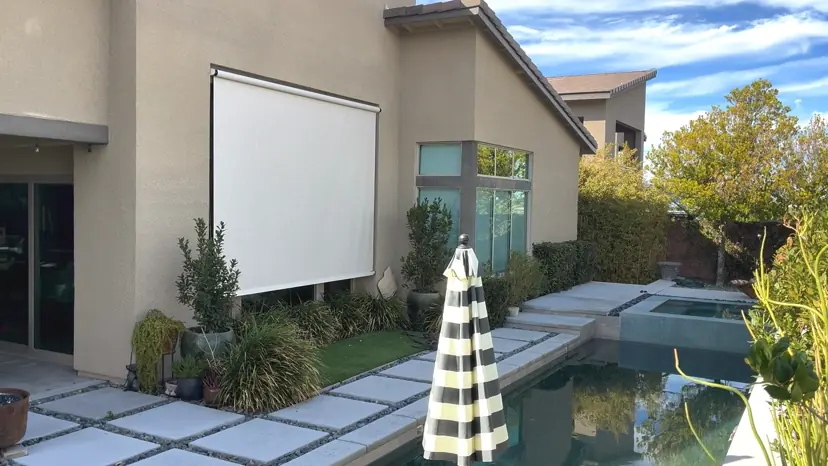
Here's what happens with a typical motorized roller shade. You find one on Amazon for $300–$500. It shows up, you mount it to your patio header in an hour, and it looks great. The fabric is crisp, the motor is smooth, the remote works from across the yard. Genuinely good product — for about 18 months.
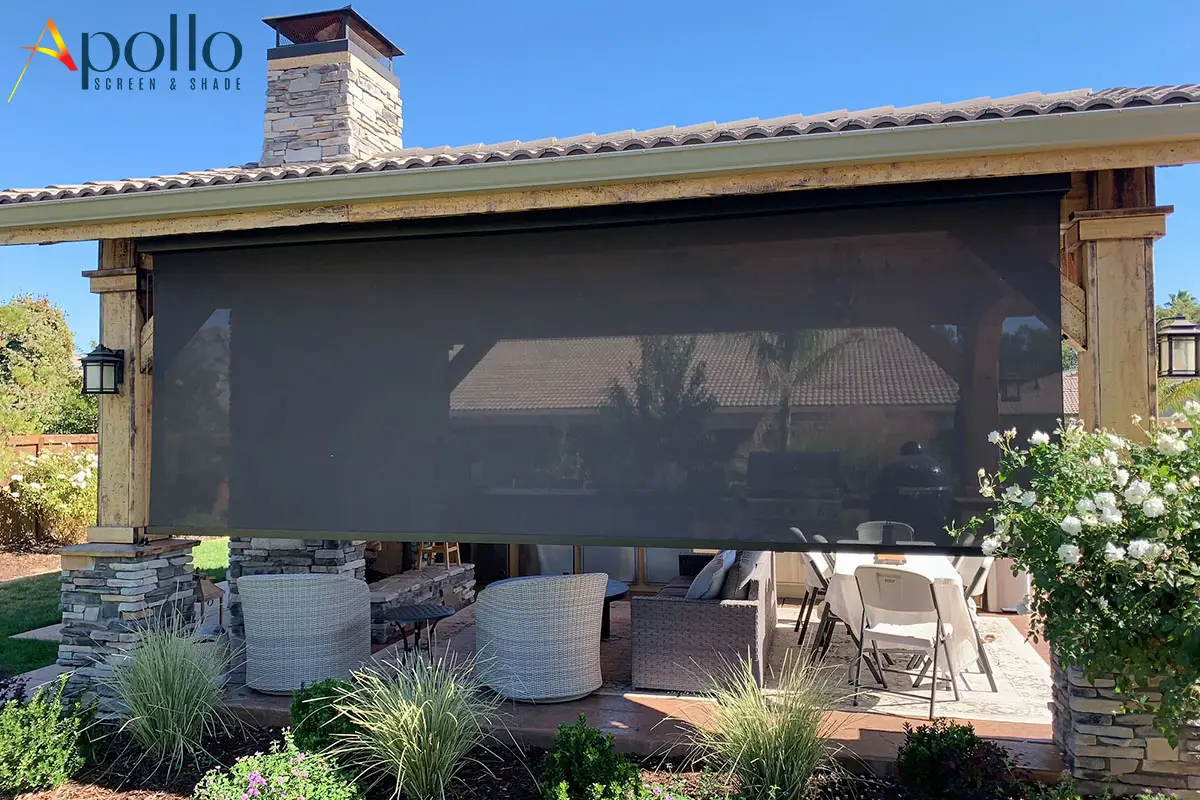
Then the edges start fraying where the sun hits hardest. The motor hesitates on the way down because there's no obstacle detection and the mechanism is wearing. A storm comes through and the wind catches the bottom hem — because there's nothing holding it — and now you've got a shade that's half off the roller and you're on a ladder with a YouTube tutorial trying to fix it.
A $300 roller shade works fine on a covered, wind-protected patio for a couple years. That's a real product for a real buyer. But if your patio is exposed, if you deal with any kind of wind, or if you just don't want to be replacing shades every few summers — you're looking at a different product entirely.
This is the part most people haven't seen before. A zip-track shade doesn't just roll down from the top — it rolls down and locks in. The fabric edges have a zipper strip that's impulse-welded to the material. As the shade deploys, that zipper feeds into aluminum side channels — the "tracks" — that run the full height of the opening. The fabric is physically sealed on both sides.
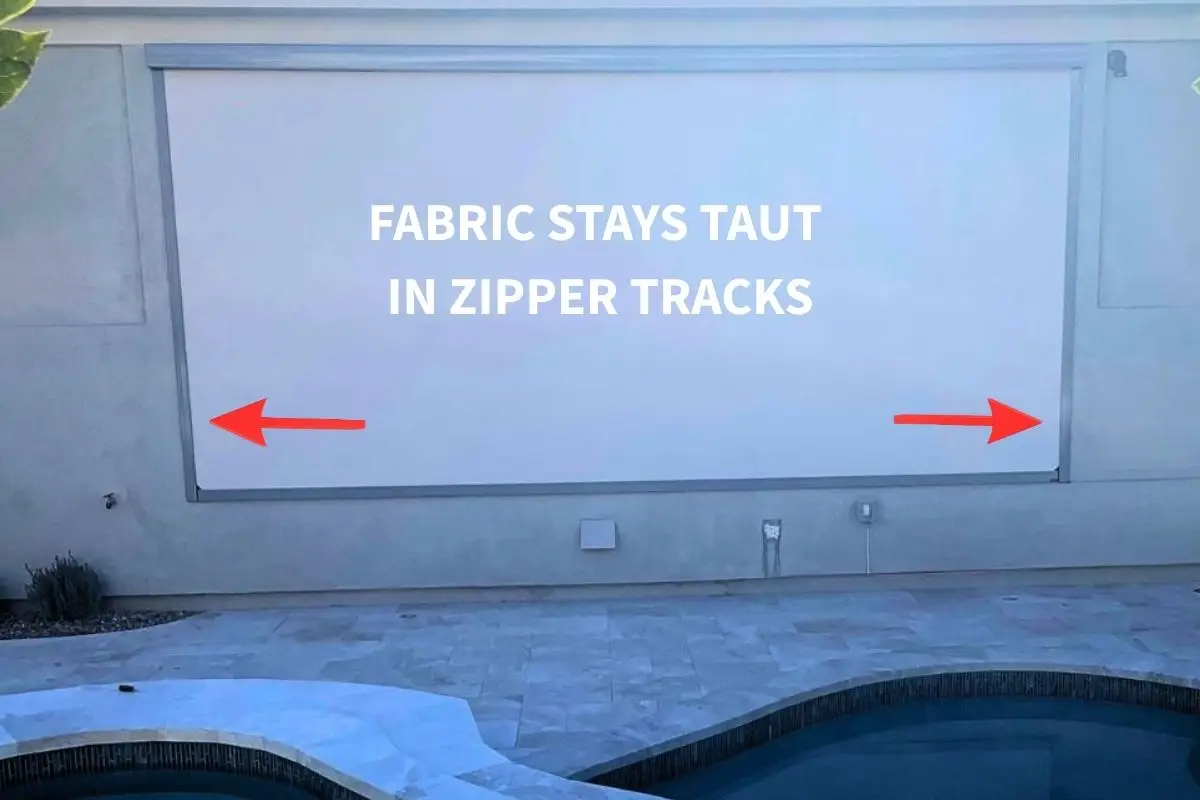
What that means in practice: wind can't get behind the shade. There's no bottom hem flapping. There are no light gaps at the edges. The shade creates a sealed plane from the housing at the top to the weighted bottom bar, locked into tracks on both sides. It's closer to a window than a curtain.
The housing cassette sits at the top of the opening — under 5 inches tall for most sizes. When the shade retracts, the fabric rolls up inside and the cassette covers everything. From the street, there's nothing to see. The tracks are narrow-profile 6063 aluminum that can be color-matched to your patio structure. Most people don't notice them at all.
The motor operates via remote control, wall switch, or smart home integration. Obstacle detection is standard — if something blocks the shade mid-cycle, the motor reverses instead of burning out. That's not a feature you'll find on a $300 Amazon roller.
The fabric is where you make your actual decision. Everything else — the track system, the motor, the housing — is the same across all Apollo shade installations. What changes is the openness percentage, and that determines how much sun, view-through, and privacy you get.
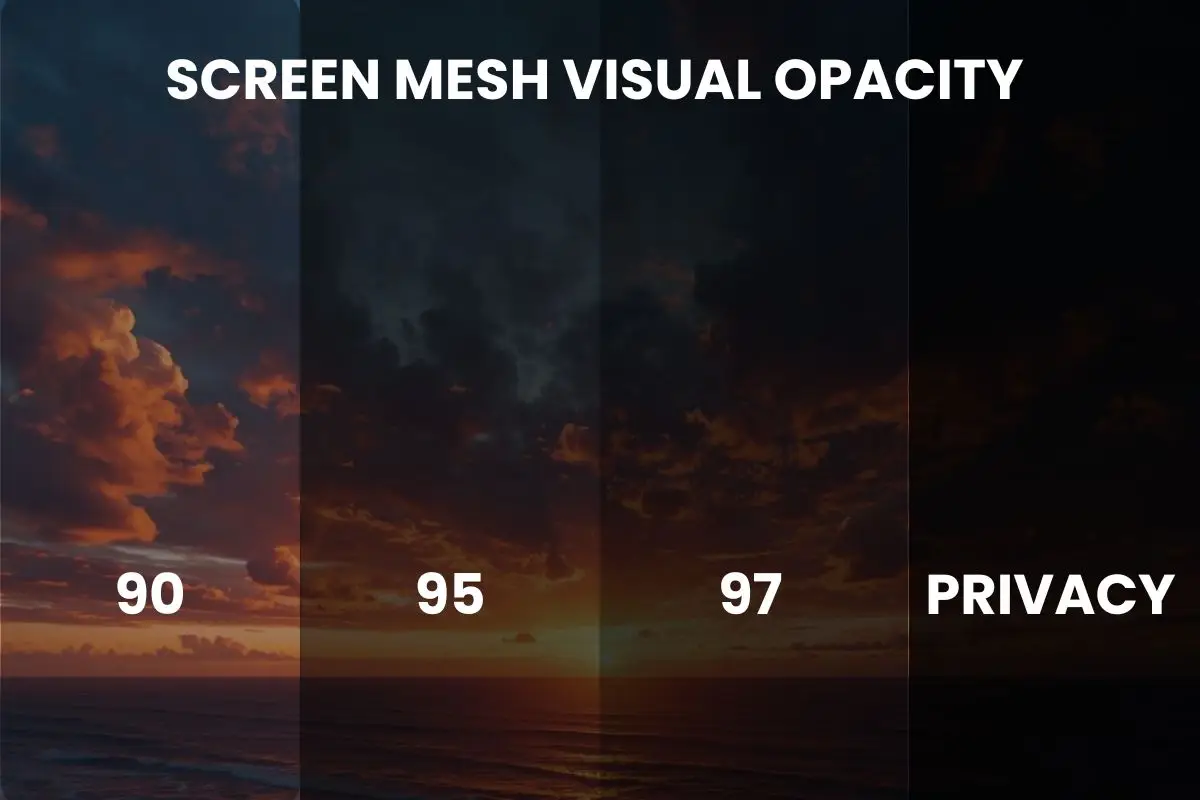
1% openness blocks almost everything. Maximum UV protection, near-total privacy from the outside, significant heat reduction. This is what you want on a west-facing patio that gets hammered with afternoon sun, or next to an outdoor kitchen where you're standing at a grill and don't want to cook yourself along with the steaks.
3% is what about 60% of our customers choose. Good UV protection, reasonable view-through during the day, and strong daytime privacy — people outside can't see in, but you can see out. It's the balance point. If you're not sure which to pick, this is probably the one.
5% gives you more view-through. Popular on pool enclosures where you want to see the yard while cutting the glare. 10% is mostly decorative — light filtering with minimal privacy. We install 10% occasionally on commercial patios where the restaurant wants ambiance without full sun block.
See full fabric specifications and color options on our PowerScreen product page.
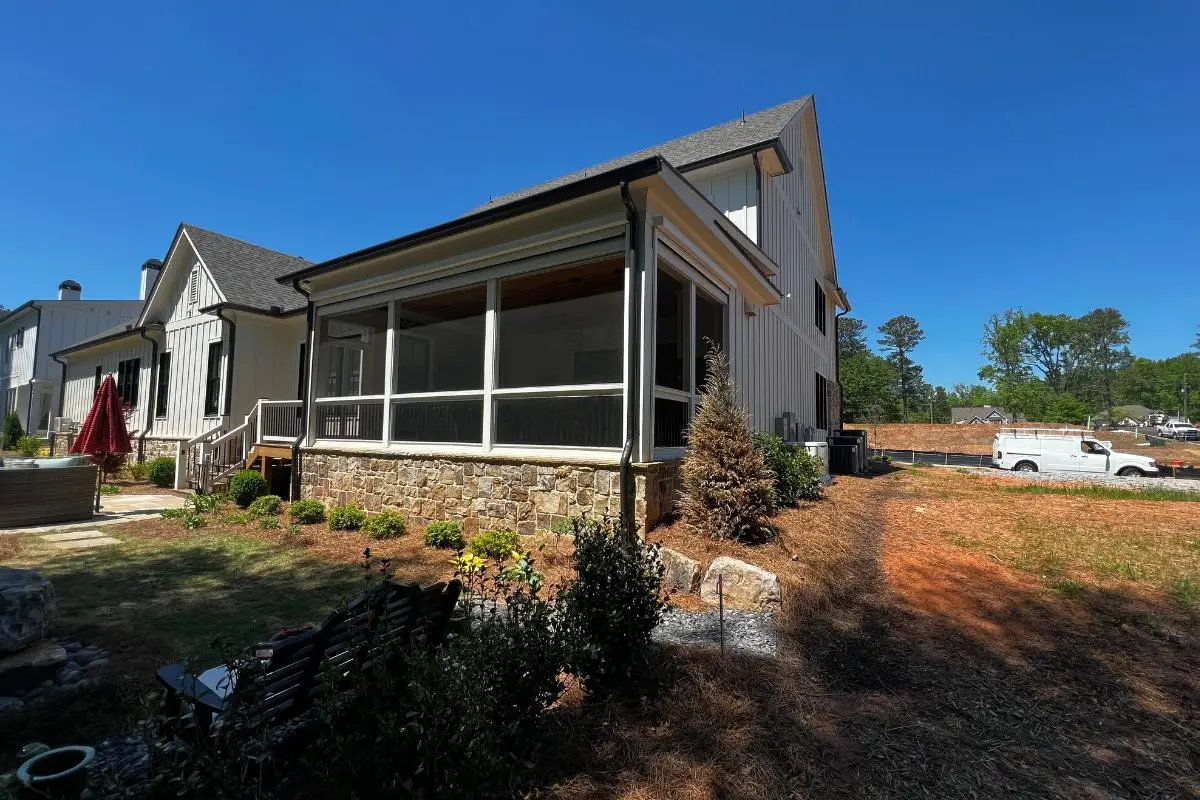
The short answer: anywhere you have a vertical opening you want to close off from sun, wind, or visibility. Covered patios are the most common — that's probably 70% of our shade installations. But we put these on pergolas, lanais, pool cage enclosures, outdoor kitchens, and commercial restaurant patios regularly.
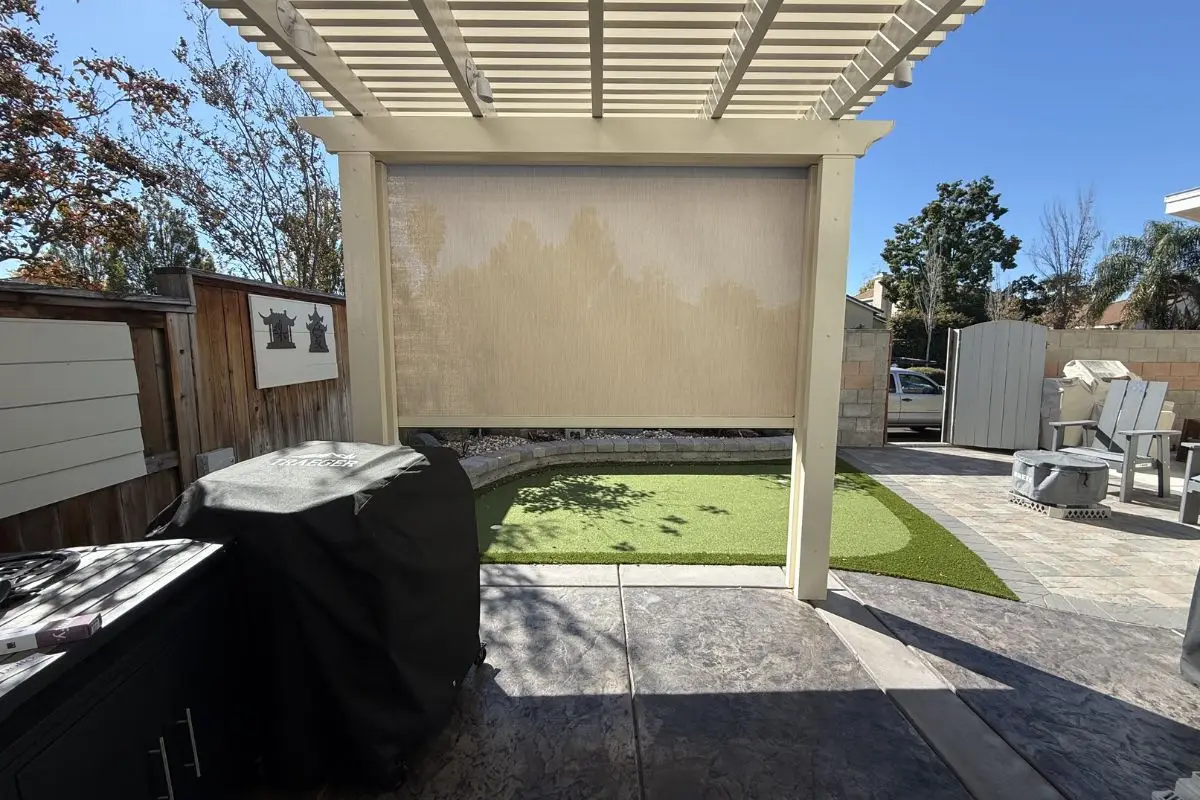
Pergolas are worth calling out specifically because they're where zip-track matters most. A pergola is open to wind on all sides. A free-hanging roller shade on a pergola is basically a kite. The zip-track keeps the fabric locked in the side channels regardless of wind direction — which is why we can install on pergolas that other shade companies won't touch.
Full application gallery and use cases on our PowerScreen page.
| DIY Roller (SmartWings / Yoolax) | Cable-Guided (Insolroll Oasis) | Apollo PowerScreen (Zip-Track) | Retractable Screen (Genius / Metro) | |
|---|---|---|---|---|
| Price | $200–800 DIY | $800–1,500 | $2,500–4,000+ | $2,000–3,500 |
| Installation | DIY, 1–2 hours | DIY or pro | Pro only | Pro only |
| Track System | None — free-hanging roller | Side cables (optional) | Zip-track — fabric sealed in channels | Standard track |
| Wind Performance | Flaps in any wind | Moderate with cables | Wind-rated — sealed edges | Moderate |
| Fabric Warranty | 1–3 years | 5 years | 20 years | 3–5 years |
| Motor Warranty | 1–3 years | 5 years | 20 years | 3 years |
| Max Width | ~10–12 ft | ~16 ft | 20+ ft (linked units) | ~20 ft |
| Obstacle Detection | No | Some models | Yes — all models | Some models |
| Best For | Budget, sheltered patios, temporary | Mid-range, some wind protection | Daily use, wind, permanent | Bug/screen use primarily |
Every Apollo shade is custom-measured and factory-cut to fit your specific opening. This matters more for shades than it does for screens, because with a zip-track system, precision is structural. A quarter-inch gap between the fabric edge and the track defeats the entire purpose — wind gets in, light leaks through, and you've paid $3,000 for a product that performs like a $300 one.
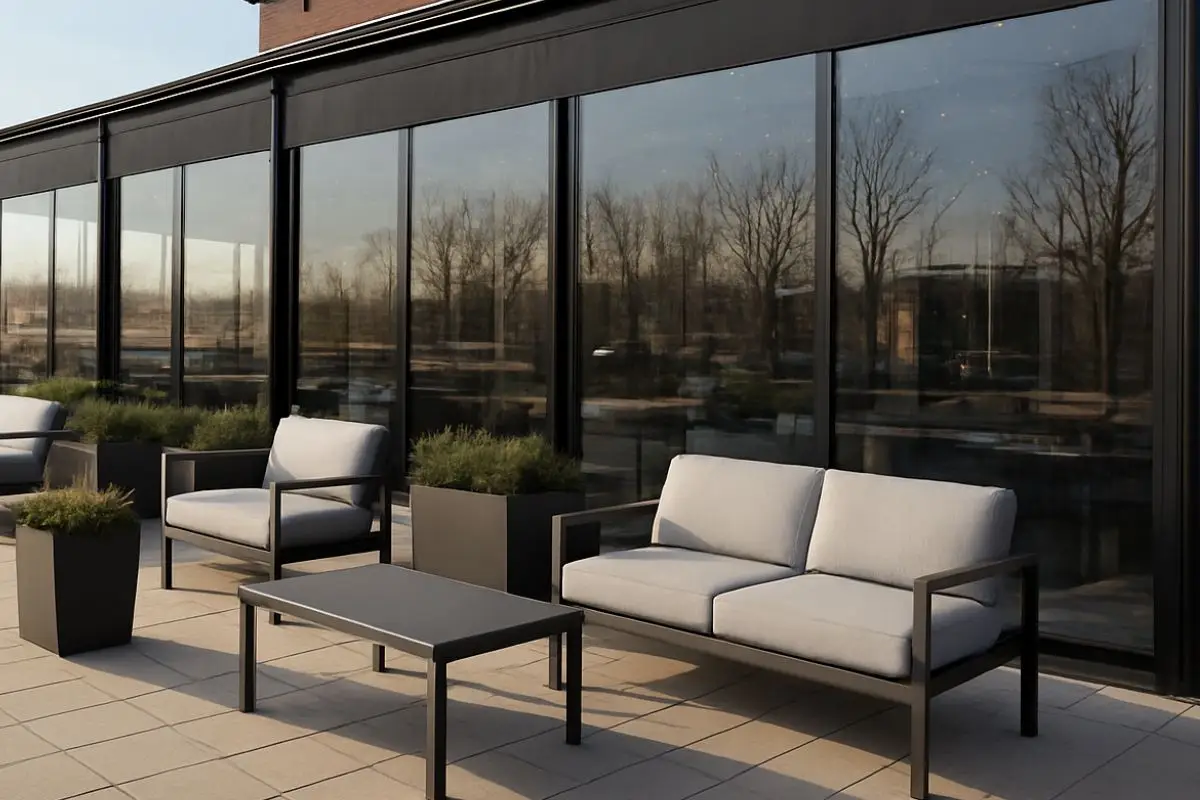
Roller shades use "close enough" sizing because the fabric hangs free anyway — a half-inch either direction doesn't matter. Zip-track requires measurement within 1/16 of an inch. That's why every Apollo installation is done by a factory-trained installer, not dropped on your doorstep in a box.
20-year fabric warranty. 20-year motor warranty. Heavy gauge components and 6063 T6 aluminum throughout — the housing, the tracks, the bottom bar. Impulse-welded zipper retention on the fabric edge. This is not a product built to be replaced in three years.
For context: most DIY roller shades carry 1–3 year warranties. Cable-guided systems are typically 5 years. The gap isn't because Apollo is being generous — it's because the product is built differently. When you impulse-weld a zipper into marine-grade fabric and run it through extruded aluminum tracks, the failure points that kill cheaper shades simply don't exist.
Full product specifications, fabric data, and warranty details on our PowerScreen page.
Professional-install zip-track systems typically run $2,500–$4,000+ per opening depending on size and fabric. DIY roller shades are $200–$800 but they're a fundamentally different product — no track system, shorter warranties, and not rated for wind. For a detailed breakdown of what drives the cost, see our full motorized shade pricing guide.
For daily use on an exposed patio, yes. A $300 DIY shade that lasts 2–3 years costs more over time than a $3,000 zip-track system that lasts 20+ years. The math works when you factor in replacement costs, wind damage, and the difference between a sealed system that performs every day and a free-hanging roller that needs replacing every few summers.
The track system. Roller shades hang free — fabric drops straight down with nothing holding the edges, which means wind catches them and light leaks around the sides. Zip-track shades seal the fabric into aluminum side channels using an impulse-welded zipper strip. Wind can't get behind them, light can't leak around them. Two completely different products that happen to share a motor.
Side tracks are aluminum channels that run the full height of the shade opening. The fabric edge has a zipper strip that locks into the channel as the shade deploys, sealing the fabric completely. Wind can't get behind it, light can't leak around it. Also called "zip-track." This is what separates professional-install motorized shades from DIY roller shades.
Zip-track shade systems with side channels typically cost $2,500–$4,000+ per opening. The side track mechanism, custom measurements, and professional installation are what drive the cost above DIY alternatives. The 20-year fabric warranty and 20-year motor warranty factor into the long-term value.
Depends on the type. Free-hanging roller shades flap in any wind and should be retracted. Cable-guided shades offer moderate resistance. Apollo's zip-track system locks fabric edges into sealed aluminum channels, so wind can't get behind the shade. Most DIY shades need to be retracted in wind. Zip-track systems don't.
3% is the most popular — good UV block, reasonable view-through, and strong privacy from outside. Choose 1% for maximum sun protection on west-facing patios. 5% works well for pool enclosures where you want to see the yard. 10% is mostly decorative — light filtering with minimal privacy. About 60% of our customers go with 3%.
Yes — pergolas are one of the most common installations. The posts provide mounting points for side tracks and the overhead beam supports the housing cassette. Works on wood, aluminum, or vinyl pergolas. Everything is custom-measured to fit your specific pergola dimensions.
Apollo's zip-track shades carry a 20-year fabric warranty and 20-year motor warranty. The heavy gauge components and 6063 T6 aluminum housing are built for continuous outdoor exposure. The motor is rated for 10,000+ cycles. Compare that to 1–3 year warranties typical of DIY roller shades.
No — different product category. Costco and Amazon sell DIY roller shades with no track system, no obstacle detection, and shorter warranties (1–3 years). Professional-install zip-track shades are custom-measured, sealed in side channels, and backed by 20-year warranties. It's similar to comparing a window AC unit to a central HVAC system.
Yes — compatible with Alexa, Google Home, and most smart home systems. Remote control and app operation are standard. But the real differentiator isn't connectivity — most DIY shades have that too. It's the motor: obstacle detection, soft start and stop, and a design rated for daily use over 20+ years.
Soft brush or sponge with mild soap and water. Never pressure wash — it can damage the fabric and force water into the housing. For the tracks, blow out debris with canned air. The fabric is UV-treated and mold-resistant, so it requires less maintenance than most people expect.

We Believe in Highly Trained and Skilled Local Technicians to Sell, Service & Install Our Products