A motorized patio screen is a retractable screen or shade that lives inside a slim housing above your opening. Press a button on the remote, your phone, or a voice assistant, and it deploys down through side tracks. Press again and it disappears back out of sight.
Custom built by hand and fully assembled in the USA, installed by factory-trained technicians nationwide, and backed by the longest warranties in the business.
Apollo Screen & Shade Introduction: two decades of building motorized retractable screens and shades.
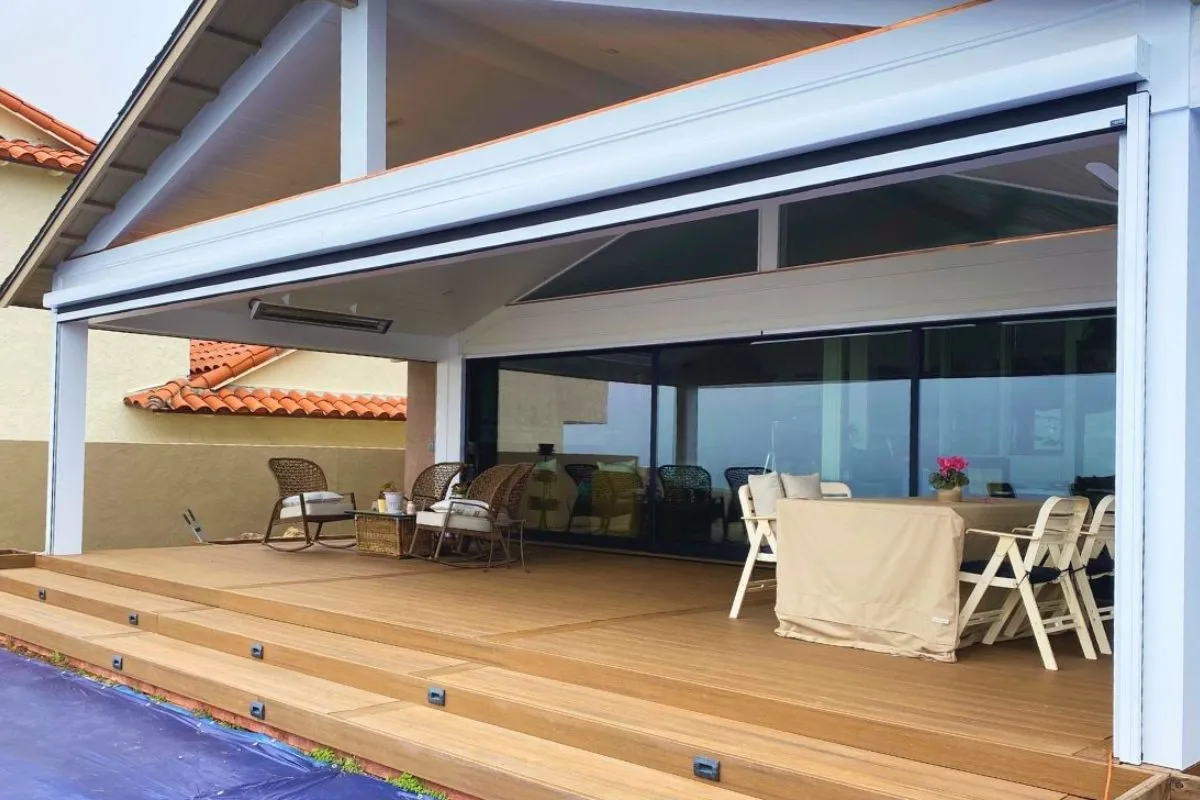
If you've never seen one in person, think of it this way: a motorized patio screen is a large retractable screen or shade that lives inside a compact housing mounted above your opening. Hit a button on the remote, your phone, or ask Alexa, and the screen deploys down through side tracks that lock the fabric in place. Hit the button again and it rolls back up out of sight.
That's the short version. The longer version involves about twenty years of engineering, a zipper retention system that keeps bugs and wind from getting under the fabric, obstacle-detection motors that stop if something's in the way, and a level of precision most people don't expect from what looks like a fancy window shade.
These things go by a dozen different names depending on who's selling them. Phantom calls theirs Executive Screens. Universal calls them Motion Screens. ClearView originally coined the term Power Screen. You'll also hear zip screens, keder screens, retractable screens. The names are all over the place. What they all describe is the same basic concept: a motorized screen or shade, engineered for exterior use, that retracts out of sight when you don't need it.
We prefer “PowerScreen.”
Modern Porch Enclosures: turning a covered porch into a fully enclosed, bug-free outdoor room.
Every Apollo PowerScreen, whether it's covering a patio, wrapping a porch, or spanning a garage, uses the same core system: a slim aluminum housing mounted to the frame, a spring-and-motor track, and a mesh or shade panel that deploys when you want it and disappears completely when you don't.
This video shows exactly what that looks like in practice: a covered porch that's mesh-in, fully shaded, bug-out one moment, and fully open to the yard the next. No swapping storm panels, no wrestling a fixed screen door, no seasonal teardown. That's the whole point of building the system around a motor and a track instead of a frame you have to remove by hand. Built for the elements, and it gives you an extra 60 nights a year enjoying your backyard.
People tend to think of these as patio bug screens, and that's where some of them end up, but the applications have grown a lot over the past decade. The fabric you choose changes what the screen actually does, so the same system can serve very different purposes depending on the mesh. For example, you can cut the heat of the summer sun while still enjoying the breeze. You could also trap the heat at night or in the winter, making your backyard an extended summer and spring destination. Get daytime privacy from neighbors who are just a little too close to your property line, or full-time privacy with the right mesh. Turn your garage into the ultimate man-cave or she-shed. Motorized shades like these increase the value of your home.
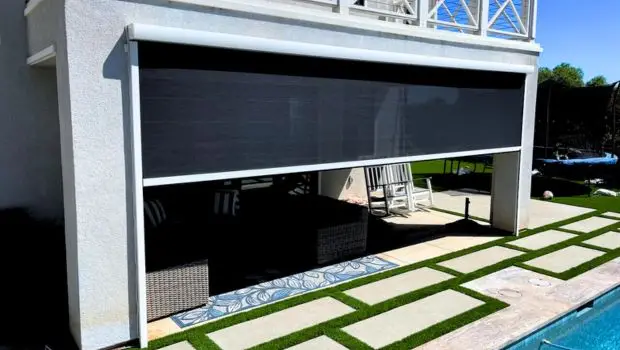
Our bread and butter. Seal in a covered patio or three-season room to use it year-round without bugs, wind, or an audience. We've enclosed everything from a 4-foot kitchen window to a 35-foot covered patio with the same system.
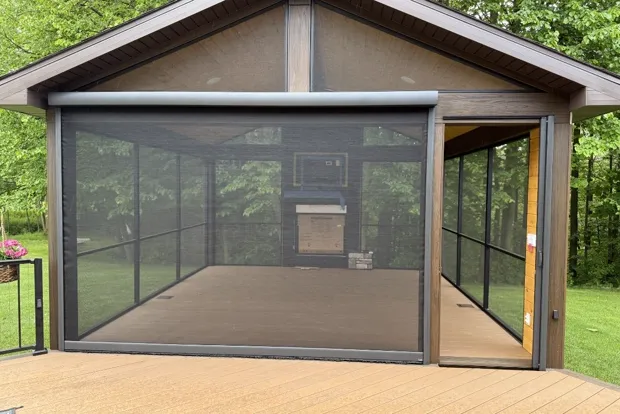
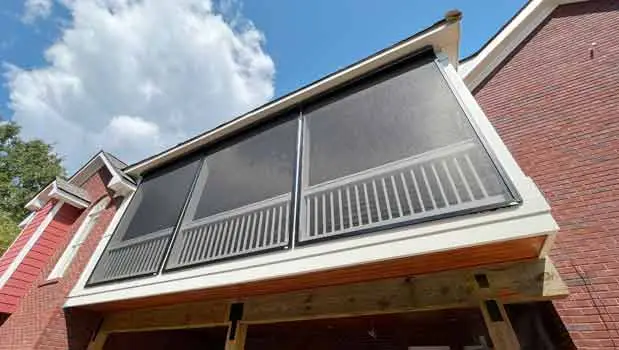
Fixed screens mean staring at mesh all day. Retractable screens give you bug protection when you want it and a completely open porch when you don't. Adds roughly 100 days a year of usable porch time.
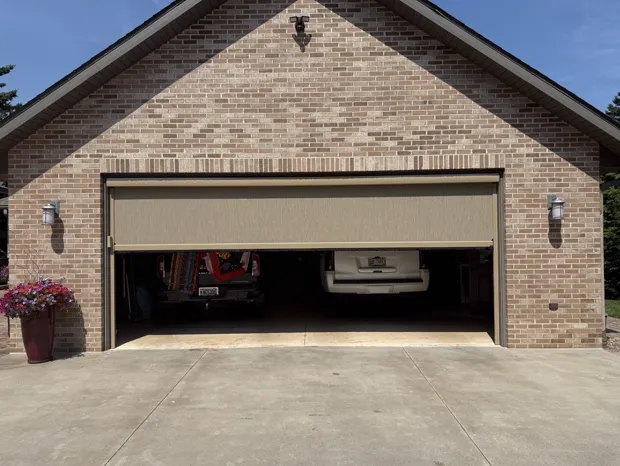
Turns a two-car garage into a home gym, office, or workshop without the mosquitoes.
Explore garage screens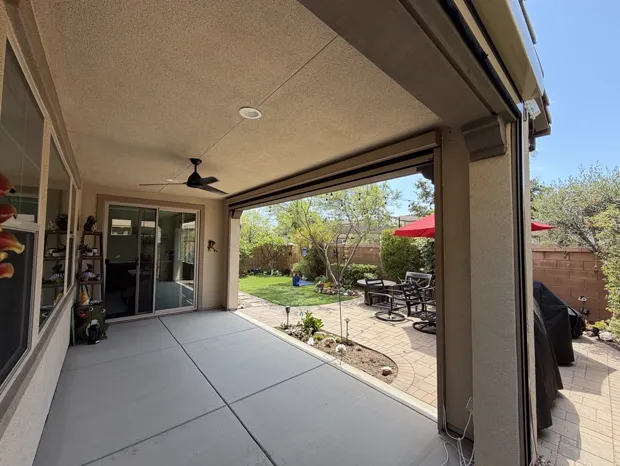
Same motorized system, solar fabric instead of bug mesh, blocking 75% to 97% of heat and UV.
Explore outdoor shades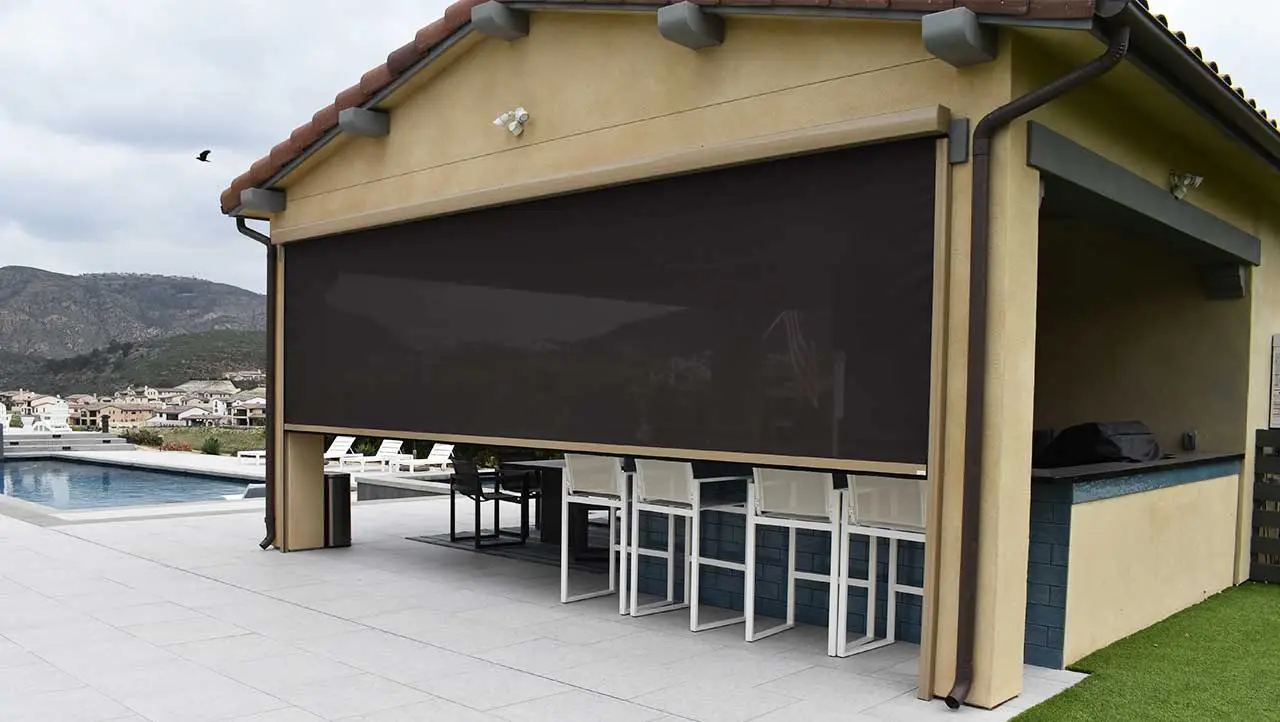
Most Apollo PowerScreen installations run $3,000 to $6,000+. The range comes down to opening size (a 6-foot patio door costs less than a 30-foot wraparound porch), fabric choice, and how many units you need. Your dealer measures your exact opening on-site and gives you a firm price during your free consultation. No ballpark guesses, no surprises.
What's included in that range: custom fabrication to your exact opening, the housing and motor, your choice of fabric and one of 13 standard colors, and professional installation by a factory-trained technician. It doesn't include a self-install option. We don't offer one, and there's a reason (see below).
We'll say it upfront: we manufacture these, so yes, we think ours are the best. But we've been at this for over two decades and we've seen every competitor's product get installed, break down, get warrantied, and in a lot of cases get ripped out and replaced with ours. We know what fails on other brands because we used to install them before we started building our own. Here's what we did differently and why it matters.
Every motorized patio screen we build goes through the same discipline you'd expect from an engineering shop, not a fabric-and-frame assembly line: components are individually tested, remotes are bench-verified before they ship, and the same team that designs the motor and track system stands behind the warranty on it. That's what two decades of building motorized retractable screens actually buys you: not just a wider fabric selection, but a system engineered with the kind of experience and care that shows up in year fifteen, not just on install day.
Most motorized screen housings are chunky and industrial-looking. Our 4.5-inch “Tiffany Cut” hood is the smallest in the industry, with the same motor, same fabric, same 30-foot spans, without looking like HVAC equipment bolted to your house.
We use injection-molded, glass-filled D66 nylon that's UV stable and won't crack or fade in the sun. Our idler uses two ball bearings, not one, for a screen that operates so smoothly and quietly you almost can't hear it.
The zipper that locks the fabric into the side tracks is impulse-welded, not sewn or glued. Laser-targeted heat fuses the materials at a molecular level on the largest impulse welder we've ever seen, 30 feet long.
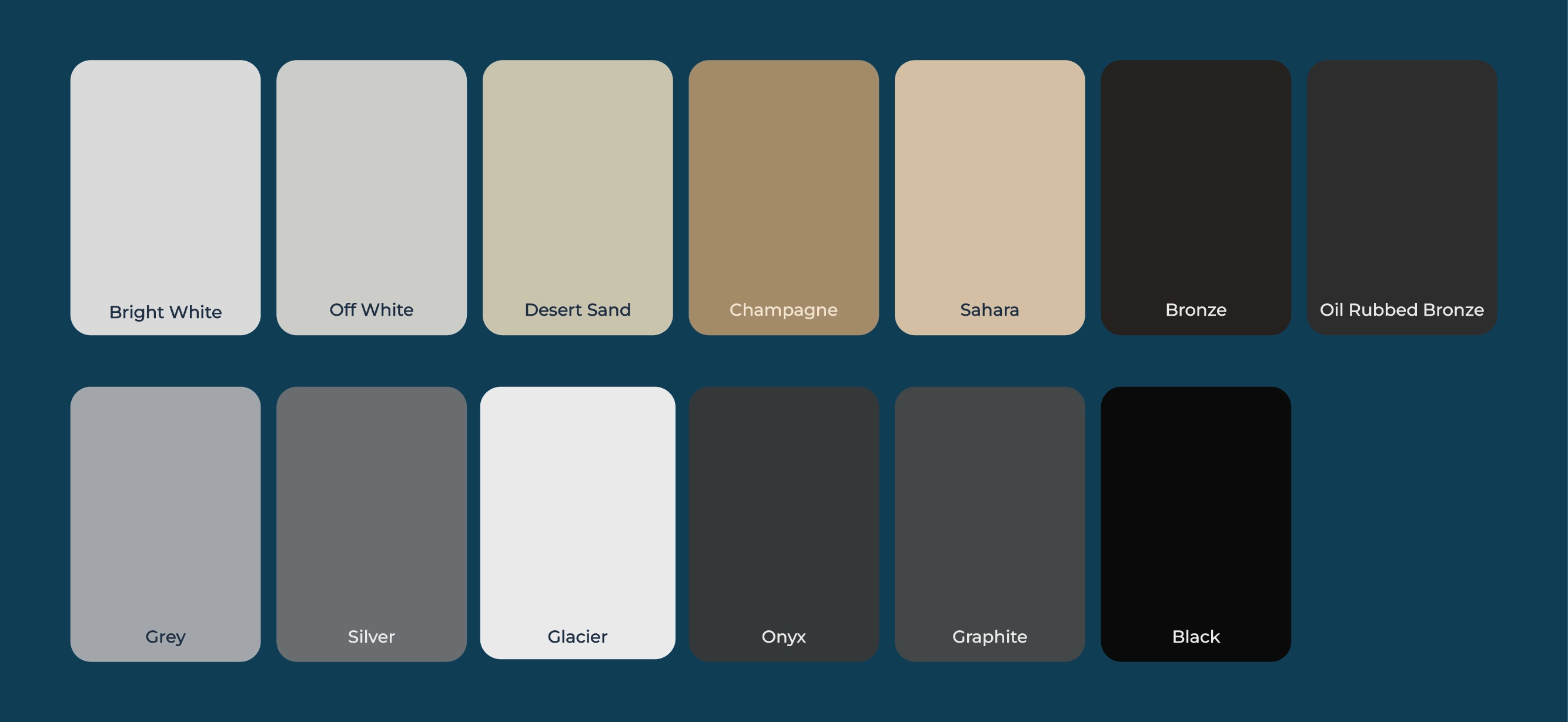
We cut the aluminum first, then powder coat it by hand, in-house, not the other way around, which leaves raw edges that peel and corrode. 13 standard colors, unlimited custom options.
The same architectural-grade aluminum used in structural applications. It's thicker and stronger than what most competitors use, which is the difference between a screen that holds up for 20 years and one that warps or sags.
Every PowerScreen ships with a Maverick remote: USB-C rechargeable (no more hunting for coin-cell batteries) and IP65 water resistant, engineered for a remote that actually lives outside.
This is important, so if you've been skimming, slow down for this part. The fabric is arguably the most important decision you'll make, and it's where a lot of people, and a lot of installers, get it wrong. There's a real difference between interior shade fabric and exterior screen fabric: interior fabrics have a fiberglass core, and an interior fabric installed outside will fall apart. It's not a matter of if, it's when.
Here's the tell: an interior solar material that blocks 95% of UV is labeled a “5% fabric.” The same blockage on an exterior fabric is labeled “95%.” If someone quotes you a “5% openness” fabric for an exterior application, they're either using the wrong fabric or they don't know the difference. Either way, walk.
Apollo uses exclusively exterior-grade fabrics from Twitchell and other outdoor-specific manufacturers, and every fabric we use comes with a 20-year warranty, designed specifically for outdoor exposure.
| Fabric | UV / Heat Block | Bugs | Privacy | Warranty |
|---|---|---|---|---|
| Insect Mesh | Low | ✓ | None | 20 years |
| Solar 75% | 75% | ✓ | None | 20 years |
| Solar 80% | 80% | ✓ | None | 20 years |
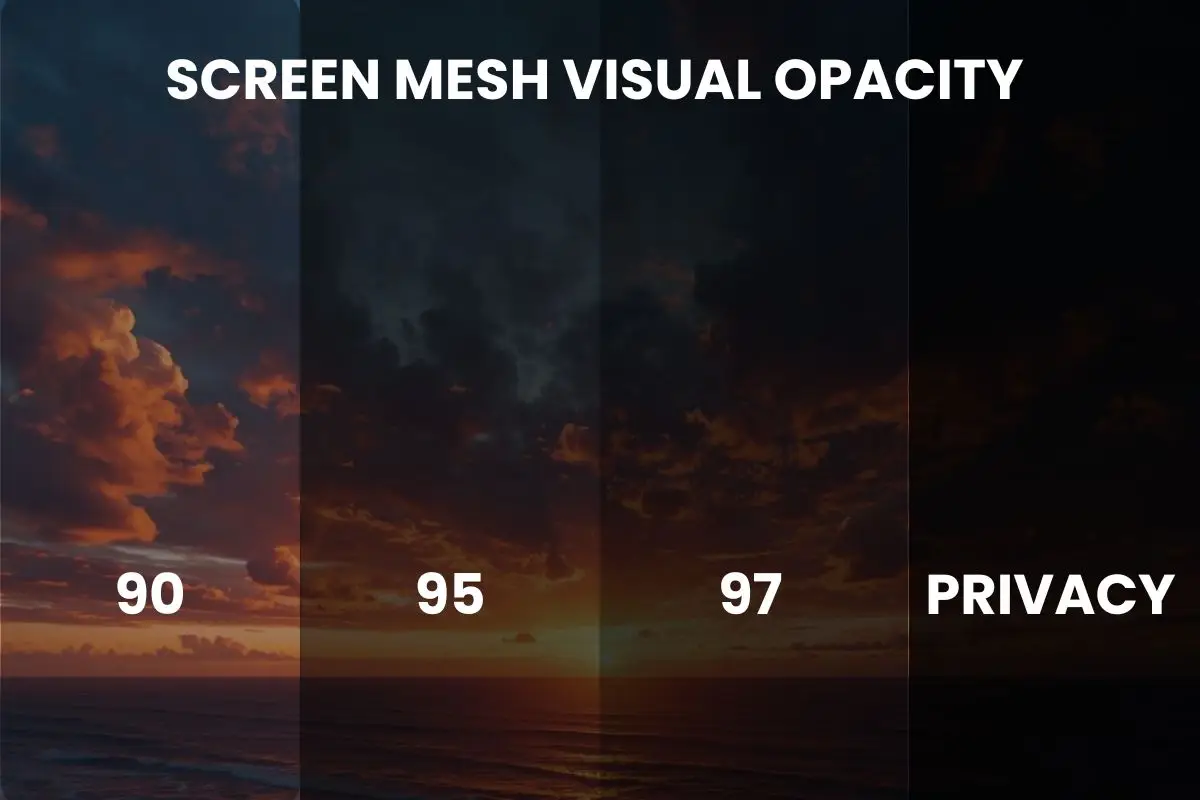
| Solar 90% | 90% | ✓ | Daytime | 20 years |
| Solar 95% | 95% | ✓ | Daytime | 20 years |
| Solar 97% | 97% | ✓ | Daytime | 20 years |
| Privacy | 99% | ✓ | Full (day & night) | 20 years |
| Clear Vinyl | N/A | ✓ | None | 20 years |
A covered patio only solves half the heat problem. Concrete, pavers, and stone absorb afternoon sun all day and keep radiating that heat back at you long after direct sun has moved off, especially on a west- or south-facing opening. A roof blocks rain. It doesn't block heat.
A PowerScreen closes off that opening with solar mesh, not fabric picked off a shelf. We spec the mesh specifically for exterior UV exposure and heat rejection rather than an interior shade material relabeled for outdoor use. Drop it and the difference on the shaded side is immediate, usually noticeable within the first few minutes, because the mesh stops radiant heat before it reaches the space instead of just diffusing it after the fact.
Every fabric we install carries a 20-year warranty, not the 5-to-7-year window you'll see on cheaper import mesh, because it's engineered and tested for exterior duty from day one instead of adapted from an interior product.
Solar mesh comes in multiple openness percentages. Tighter weaves around 3% block more heat, glare, and visibility; more open weaves around 10% trade a little shade for more airflow. Your dealer brings real fabric samples to the consultation so you're comparing them against your actual patio, not a swatch on a screen.
Solar mesh is a physical barrier first, which means it does double duty: it cuts UV and glare, and it also keeps a meaningful amount of insects off the patio in the process. It's not a substitute for a true insect screen, but it's a real improvement over an open opening.
The same drop-shade system works on covered porches and full porch enclosures, not only fully open patios. A west- or south-facing covered space that's unusable by early afternoon becomes livable year-round instead of just in the morning.
Same motorized system underneath all five. The fabric and application are what change. Here's how to think about which one fits your space.
| Product | Best For | Typical Price Range | Indoor / Outdoor Opening |
|---|---|---|---|
| Patio Screen | A single covered patio or sunroom opening | $3,000-$5,000+ | Outdoor-facing |
| Porch Enclosure | Fully enclosing a wraparound porch on multiple sides | $4,500-$6,000+ | Outdoor-facing, multi-panel |
| Garage Screen | Turning a garage into a usable room without bugs | $2,500-$4,500+ | Garage opening |
| Outdoor Shade | Blocking heat and UV on a west-facing patio or veranda | $3,000-$6,000+ | Outdoor-facing |
| Privacy Screen | Full day-and-night visual privacy on a deck or patio | $3,000-$5,500+ | Outdoor-facing |
Price ranges are typical, not quoted. Your dealer measures your exact opening and gives you a firm number.
Every housing is powder-coated in-house, by hand, in 13 standard colors that cover most home trim, not just painted close, matched. Because we cut the aluminum before coating it (not after, like most competitors), there are no raw edges left to peel or corrode over time. Need something specific? Custom color matching is available on request.
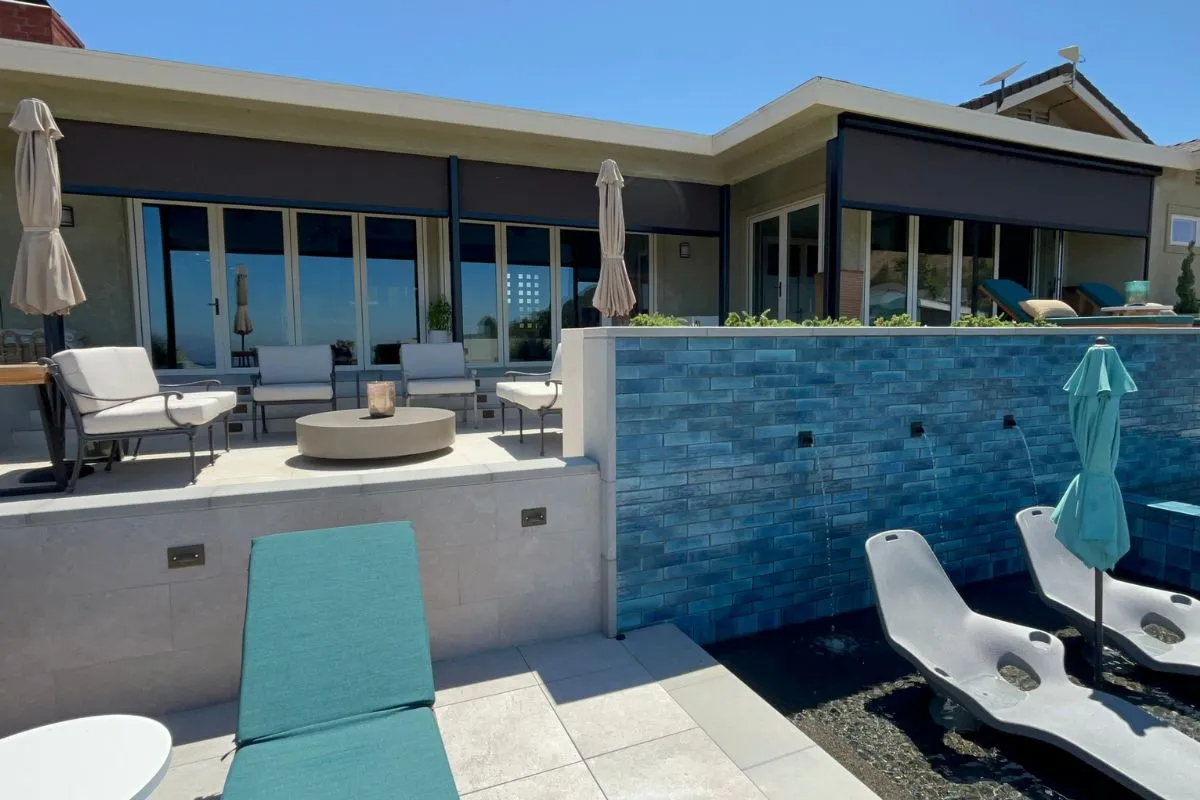

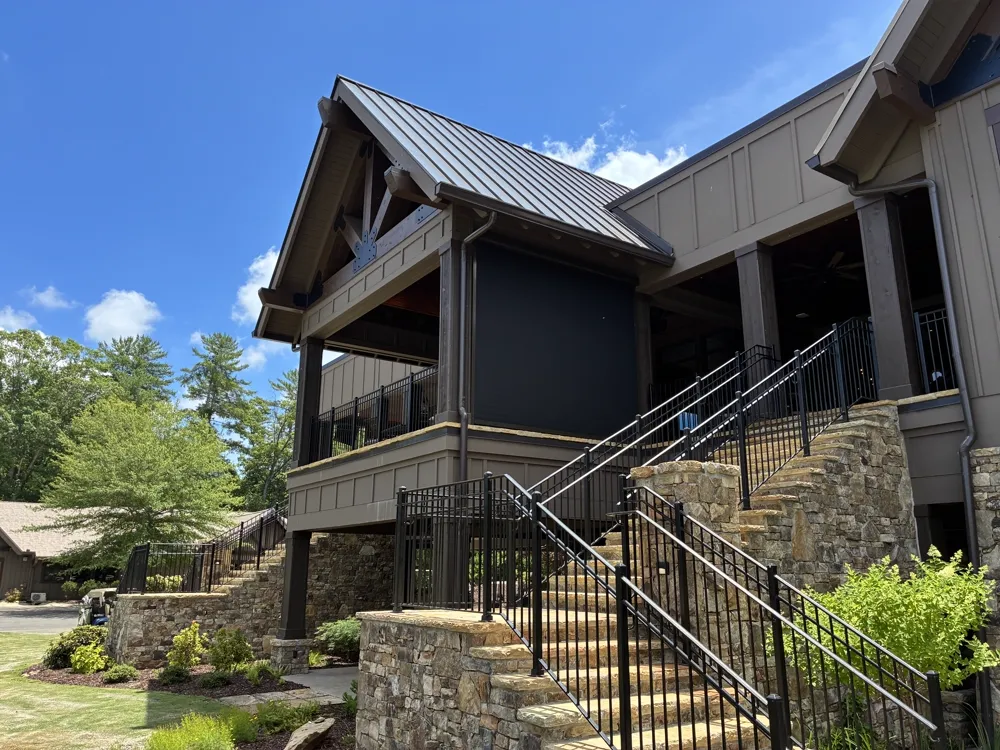
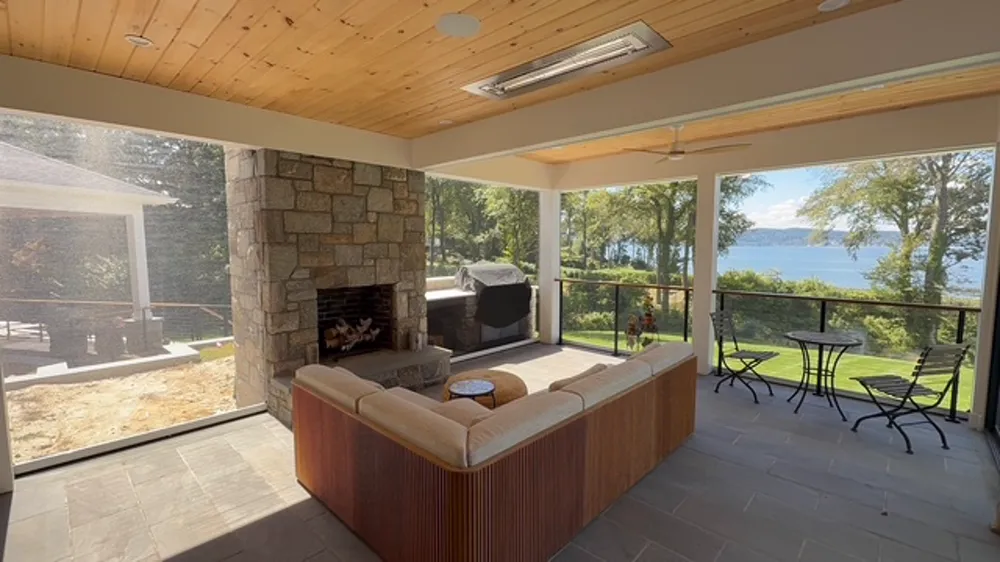
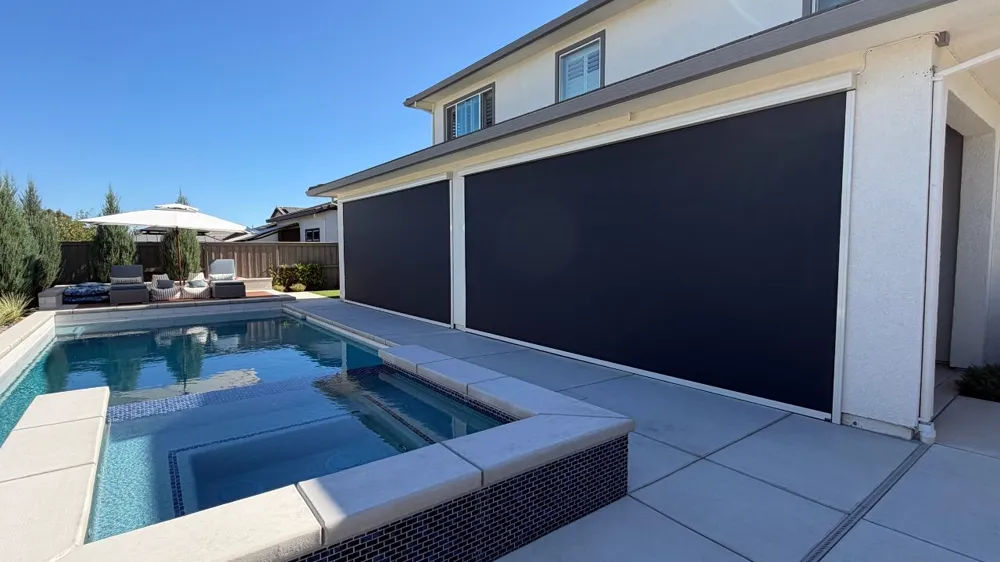
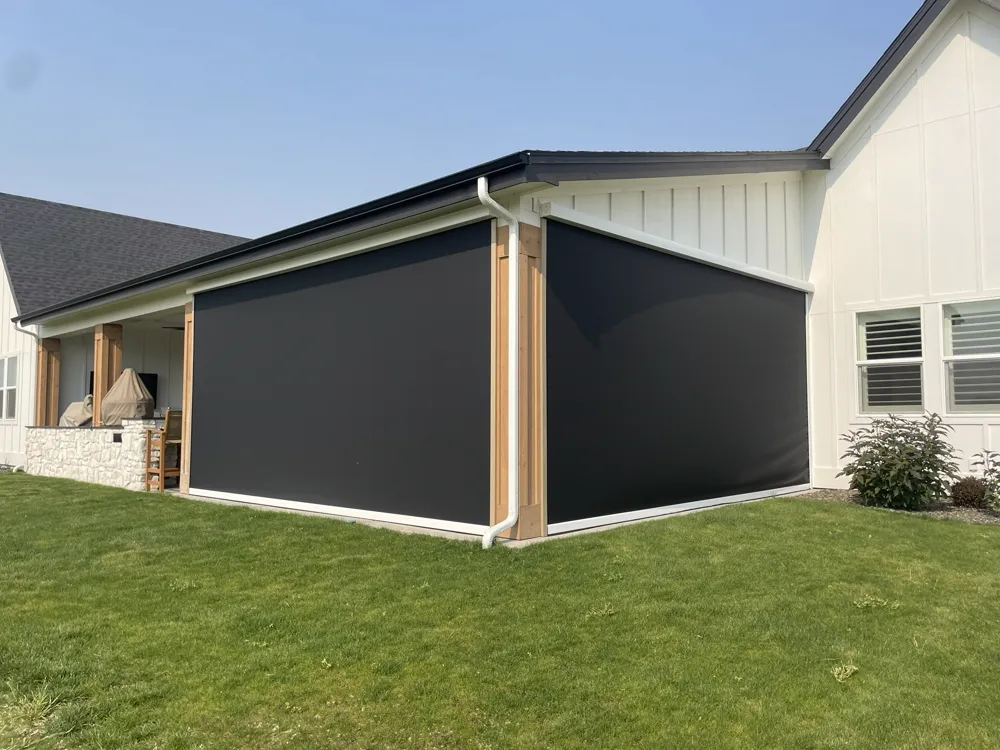
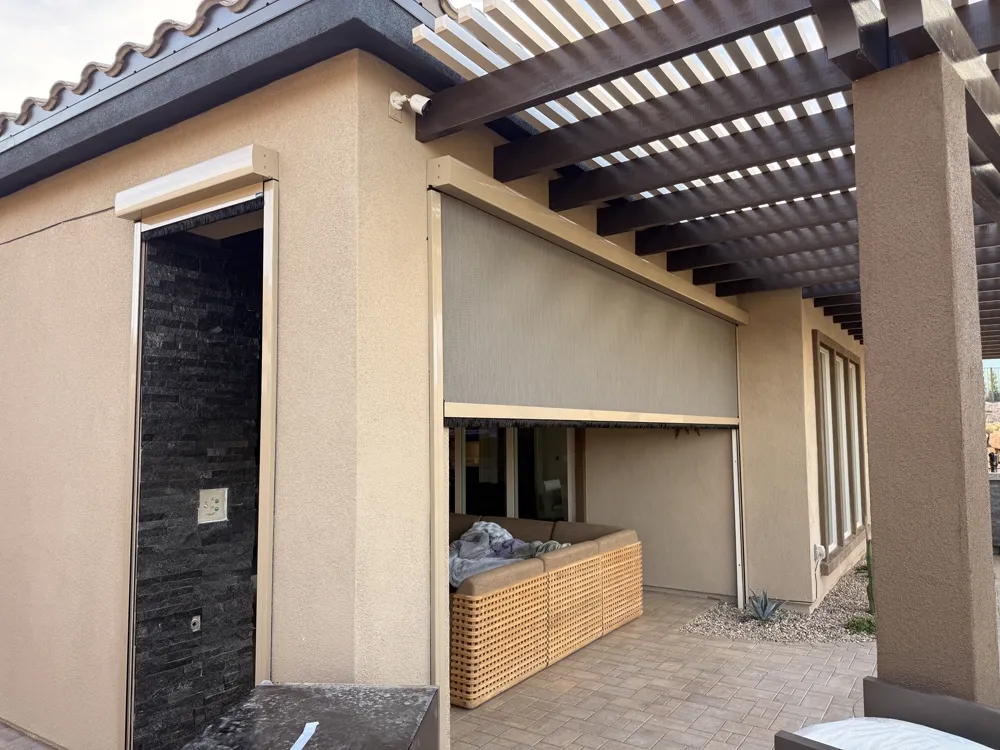
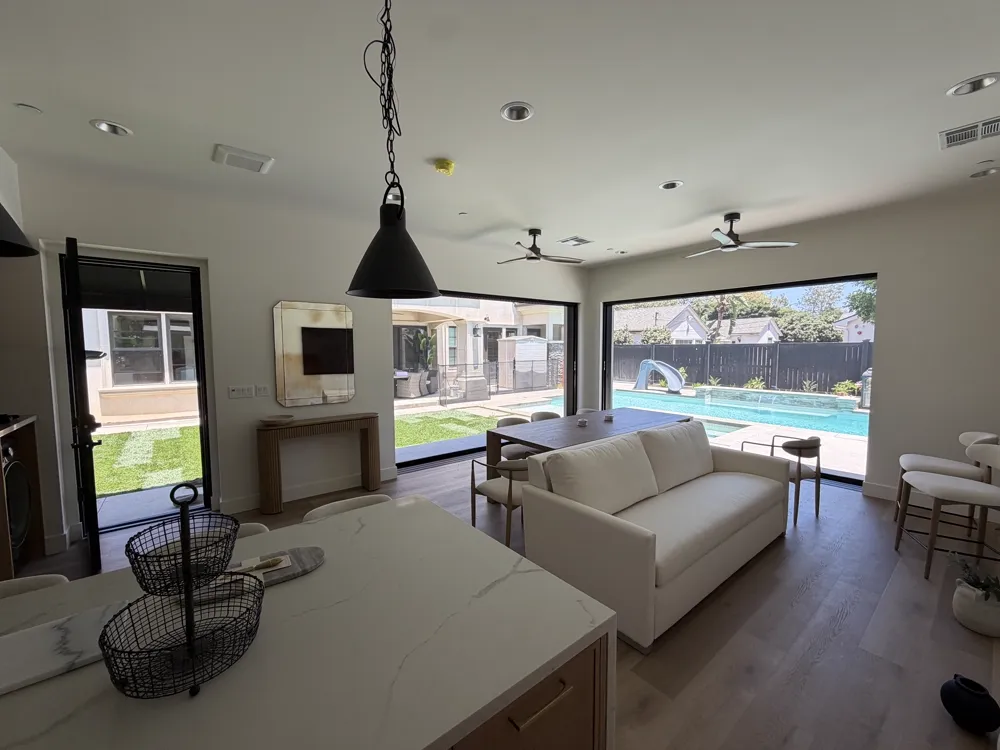
We don't sell direct to homeowners for self-install, and there's a reason. These are not curtains. A PowerScreen unit for a standard patio opening can weigh over 100 pounds. The motor needs to be programmed for limits and obstacle detection. The mounting has to be dead level or the fabric tracks wrong. The electrical connection needs to be right.
Before your screen even leaves the factory, it passes through three separate quality-control checkpoints, then gets packaged in specialized foam for transit. Your average window-treatment installer has never touched one of these. We know, because we used to get called to fix their work.
Every Apollo screen is installed by a factory-trained technician from our dealer network. They measure, consult on fabric and color, handle the mounting and wiring, and program the motor. If something goes wrong down the road, they're local and they know the product.
4.9 stars across 1,671 Google reviews nationwide. Here's what homeowners say about their Apollo PowerScreens.
“Purchased 5 Apollo Power Screens with the 95% Espresso screen for our 12’ x 30’ patio. These screens have exceeded my expectations! In 22 mile per hour wind and 30 degree temperature we were very comfortable. 1 propane heater made our patio 55 degrees with no breeze.”
“We just love having the ability to simply hit a button on a remote to raise and lower our giant motorized screens at once. It's not only fun, but very practical. We now have the perfect setting for an outdoor dinner or just catching up on reading, in our new three-season patio!”
“First and foremost, they actually showed up according to schedule, respecting our time… Greg and his assistant were incredibly friendly and proficient, taking the time necessary to complete a thorough service and attentive to questions. Overall, we are extremely happy with our motorized screen purchase and customer service.”
Free measurement, free consultation on fabric and color, custom build, professional install. Typical cost is $3,000-$6,000+, backed by a 20-year fabric and motor warranty.